


Dragon Boat Paddle: Choosing the Right Paddle for Better Performance


Dragon boat racing is a powerful combination of teamwork, timing, strength, and technique. Every paddler contributes to the movement of the boat, making equipment selection an important part of the overall experience. A well-designed dragon boat paddle can help paddlers maintain a consistent stroke, improve control, and work more efficiently with the rest of the team.
Unlike recreational canoeing, dragon boat paddling depends heavily on synchronization. Dozens of paddlers may need to move their paddles through the water at nearly the same time. Small differences in paddle size, technique, or timing can affect the rhythm of the entire crew. For this reason, choosing a paddle that feels comfortable and responds predictably is essential for both training and competition.
Understanding paddle construction, sizing, blade shape, weight, grip, and maintenance can help new and experienced paddlers make better decisions when selecting equipment.
Understanding Dragon Boat Paddling

Dragon boat paddling is a team-based water sport in which paddlers work together to propel a long, narrow boat. The sport is known for its energetic atmosphere and strong emphasis on coordination.
Each paddler needs to follow the rhythm of the crew. Timing is essential because the boat moves most efficiently when strokes are performed together. The paddler must also maintain proper body position and use controlled movements rather than relying entirely on arm strength.
A paddle becomes an important part of this process. It needs to provide enough surface area to catch the water effectively while remaining manageable throughout repeated strokes.
Dragon boat paddling can be physically demanding. Training sessions may involve numerous strokes over relatively short periods, while competitive races require high-intensity effort. Equipment that feels comfortable and balanced can help paddlers concentrate on technique instead of struggling with their gear.
For beginners, learning proper technique is often more important than generating maximum power. A consistent stroke allows the paddler to become comfortable with the rhythm of the boat and gradually develop strength and endurance.
As experience increases, paddlers often become more aware of subtle equipment differences. Paddle weight, blade shape, shaft flexibility, and grip design can influence how a stroke feels and how efficiently energy is transferred into the water.
The Importance of Paddle Design

The design of a dragon boat paddle affects how it interacts with the water. Several features should be considered when selecting equipment, including blade dimensions, shaft construction, grip shape, and overall balance.
The blade is responsible for catching and pushing against the water. A well-designed blade should provide a predictable catch without creating unnecessary resistance. The paddler needs to feel that the blade enters the water cleanly and remains stable throughout the power phase.
The shaft provides the connection between the hands and blade. Its length and thickness can influence comfort and control. A shaft that feels appropriate for the paddler allows the hands to remain in a natural position during repeated strokes.
Grip design also matters. Because dragon boat paddlers perform many strokes during training and racing, uncomfortable grips can contribute to hand fatigue. A comfortable grip allows the paddler to maintain control without excessive tension.
Balance is another important characteristic. A paddle should not feel unnecessarily heavy toward the blade or grip. Balanced equipment can make repeated movements feel smoother and more controlled.
Different paddlers may have different preferences. Some may prefer a slightly lighter paddle for fast, repeated strokes, while others may value a particular blade profile because of the way it catches the water.
The goal is to find equipment that supports efficient technique and works well with the paddler's physical characteristics and experience.
Choosing the Right Paddle Length

Paddle length is an important consideration in dragon boat paddling. The correct size can help the paddler maintain proper posture and place the blade into the water effectively.
Unlike casual paddling, dragon boat technique requires a consistent stroke position. Paddlers sit in designated positions within the boat and need to coordinate their movements with the crew.
A paddle that is too long can feel difficult to control. It may require excessive movement and can interfere with maintaining a consistent stroke. A paddle that is too short may not provide the reach needed for effective water entry.
Paddler height is one factor to consider, but it should not be the only one. Arm length, seating position, boat dimensions, technique, and team requirements can also influence paddle selection.
Beginners should follow guidance from their coach or experienced team members when selecting a paddle. Learning the correct stroke first can make it easier to understand which paddle dimensions feel comfortable.
Experienced paddlers may have more specific preferences based on their technique and training goals. They may know exactly how a certain paddle length affects their reach, stroke depth, and rhythm.
Consistency across a team is also valuable. While individual comfort matters, paddlers need to work together. Using appropriately sized paddles can help the crew maintain a more consistent stroke pattern.
The best approach is to consider paddle length as part of the entire paddling setup rather than as an isolated measurement.
Blade Shape and Water Efficiency

Blade shape has a direct relationship with how a paddle moves through the water. Different profiles can create different sensations during the catch, power phase, and recovery.
A wider blade can provide a strong connection with the water. It may allow the paddler to move more water during each stroke, but it can also require greater effort. This is an important consideration because dragon boat racing involves rapid and repeated strokes.
A narrower blade may feel easier to move during a high stroke rate. It can support a smooth rhythm and may be preferred by paddlers who focus on maintaining consistent cadence.
The blade's overall shape also affects how quickly it catches the water. A clean catch helps the paddler begin the power phase efficiently. Poor technique or an unsuitable blade can create unnecessary turbulence and reduce efficiency.
Blade thickness and construction can influence durability and weight as well. Paddles used frequently for training need to withstand repeated contact with water and normal handling.
For competitive paddlers, even small differences in blade response can become noticeable. When a crew performs hundreds of synchronized strokes, consistent equipment can help create a predictable rhythm.
Choosing a blade should therefore involve more than simply looking at its size. Think about how the blade feels during the complete stroke and whether it supports your preferred cadence and technique.
Finding a Paddle That Matches Your Technique

Every paddler develops a slightly different technique. Coaches may teach the same fundamental principles, but individual body proportions, flexibility, strength, and experience can influence how each person performs the stroke.
The paddle should support proper technique rather than force the paddler into an uncomfortable position. A suitable paddle allows the blade to enter the water at the correct point while providing enough resistance to complete the stroke effectively.
Good dragon boat technique involves more than arm movement. The shoulders, torso, core, and legs can contribute to the stroke. Coordinated body movement helps generate power while reducing the tendency to rely solely on the smaller muscles of the arms.
A comfortable paddle allows the paddler to focus on these movements. When the equipment feels natural, it becomes easier to concentrate on timing and synchronization.
This is where choosing the right dragon boat paddle becomes particularly important. The paddle should complement the paddler's technique, physical ability, and training objectives instead of being selected solely on appearance.
Team paddling also requires awareness of the crew. Individual strokes must fit within the rhythm established by the front paddlers and coach. A paddle that feels predictable can help the paddler maintain timing during intense sessions.
Training with the same or similar paddle regularly can also help develop familiarity. Over time, the paddler learns exactly how much pressure is required and how the blade responds during different parts of the stroke.
Materials and Construction
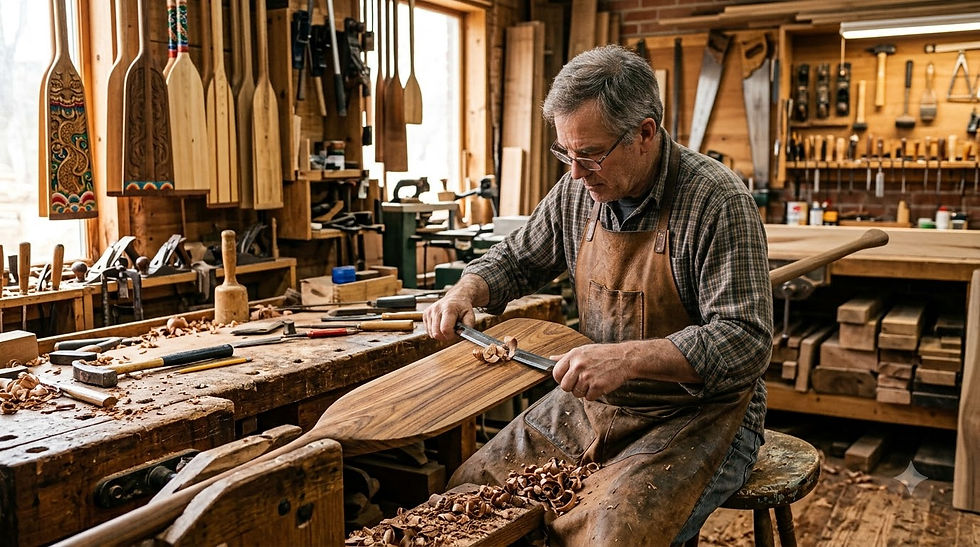
Dragon boat paddles can be made from different materials, with wood remaining a popular choice among paddlers who appreciate traditional craftsmanship and natural feel.
Wooden paddles have a distinctive appearance and can provide a comfortable sensation in the hands. Natural wood grain gives each paddle an individual character, while careful shaping can produce a balanced and responsive design.
Construction quality is important because dragon boat paddling places repeated demands on equipment. A paddle must handle frequent strokes without becoming uncomfortable or unreliable.
Weight is another consideration. A paddle should be light enough for repeated use while still providing the strength and stiffness required for effective strokes.
Synthetic materials can also be used in modern paddle construction. These materials may offer advantages in consistency, durability, and resistance to certain environmental conditions.
The ideal material depends on the paddler's priorities. Some paddlers value traditional wooden construction, while others may prioritize specific performance characteristics associated with modern materials.
Regardless of material, the construction should be appropriate for the intended level of use. Recreational paddlers may have different requirements from athletes who train several times each week.
Inspecting the shaft, blade, edges, and grip before use is always a good practice. Any equipment showing significant damage should be evaluated before returning to the water.
Caring for Your Dragon Boat Paddle

Proper maintenance can help keep a paddle in good condition and extend its useful life. Care is particularly important for paddles that are used frequently during training.
After paddling, rinse the paddle with fresh water when necessary. This is especially useful after exposure to saltwater or dirty water. Removing residue helps keep the surface clean.
Allow the paddle to dry naturally before storing it. Avoid leaving a wet paddle in a closed bag or container for extended periods.
Storage conditions also matter. Keep the paddle in a dry location away from prolonged direct sunlight and excessive heat. Avoid placing heavy objects on top of it.
Transport the paddle carefully as well. Avoid dropping it or allowing other equipment to press heavily against the blade.
If the paddle has a specific finish or construction method, follow the manufacturer's care instructions. Using unsuitable cleaning or refinishing products could damage the surface.
Good maintenance does not require a complicated routine. Simple habits such as cleaning, drying, inspecting, and storing the paddle properly can make a significant difference over time.
A well-maintained paddle is also more pleasant to use. Keeping the grip smooth and the blade in good condition allows the paddler to focus on training and performance.
Improving Performance Through Better Equipment

Equipment alone cannot replace good technique, teamwork, and training, but the right paddle can support these areas.
Dragon boat racing requires consistency. Every paddler contributes to the movement of the boat, so maintaining a reliable stroke is essential. A paddle that feels balanced and comfortable can help the paddler repeat that movement with greater confidence.
Training should focus on technique as well as physical conditioning. Strength, endurance, flexibility, and coordination all contribute to effective paddling.
The paddle should complement this preparation. If it is too heavy, poorly sized, or uncomfortable, it may become a distraction during training. The right equipment allows paddlers to concentrate on their movements and communication with the team.
Experienced teams often pay attention to equipment consistency. When paddlers use suitable paddles and understand how those paddles respond, it can become easier to maintain rhythm across the boat.
However, personal comfort remains important. A paddle that works well for one athlete may not feel ideal for another. Body size, strength, technique, and experience can all influence preferences.
Testing different designs when possible can be useful. Pay attention to how the paddle feels during the catch, power phase, and recovery. Consider whether you can maintain the desired stroke rate without unnecessary fatigue.
The ultimate goal is efficient movement. The paddle should help convert controlled body movement into forward motion while allowing the paddler to remain synchronized with the crew.
Final Thoughts on Choosing a Dragon Boat Paddle
Selecting the right paddle is an important part of becoming a confident and effective dragon boat paddler. Length, blade shape, weight, balance, grip comfort, construction, and personal technique should all be considered before choosing equipment.
A good paddle should feel comfortable enough for repeated strokes while providing predictable interaction with the water. It should support your technique rather than create unnecessary difficulty.
Beginners should focus on learning proper technique and receiving guidance from experienced coaches or team members. As paddling experience develops, personal preferences about paddle weight, blade profile, and shaft design may become clearer.
Experienced athletes can evaluate equipment based on more specific performance requirements. Small differences in balance, blade response, and comfort can become increasingly important during intensive training and competition.
Maintenance should also remain part of your routine. Cleaning the paddle, allowing it to dry, storing it correctly, and inspecting it regularly can help preserve its condition.
Dragon boat paddling is ultimately a team sport. Individual equipment choices need to work alongside timing, communication, technique, and teamwork. When the equipment feels right, paddlers can focus on the rhythm of the crew and the shared goal of moving the boat efficiently.
Whether you are beginning your first season or preparing for another competition, investing time in understanding your equipment can improve your overall experience. Dragon boat paddle selection should always be based on comfort, performance, proper sizing, and the demands of your paddling style. With the right equipment and consistent training, every stroke can become a more controlled and effective contribution to the team.

Comments